
Tech Diplomacy
Global Executive Program
Building Leadership and Sovereign Capability in the Digital Age. The only executive program that equips senior government and corporate leaders to master tech diplomacy as a core strategic capability.
Months
Immersive Weeks
Elite Leaders
Capstone Project
Flagship Executive Education
From Rule-Taker to Rule-Shaper
Technology is no longer a backdrop to national strategies and international relations. It is one of their primary drivers. Artificial intelligence, data, cybersecurity, digital platforms, and emerging technologies now shape power, security, and global influence.
Today, every country faces the same risk: becoming a rule-taker in a world where norms are written faster than they can be understood or influenced. Fragmented governance and unequal access to power are widening gaps between those who shape the digital future and those who must adapt to it.
TDGEP was created with a clear objective: to help governments and tech corporations build tech diplomacy as a core strategic capability — to secure sovereignty and translate technological change into national advantage.
Understand & Anticipate
Grasp global technology shifts and their implications for power, security, and national interest.
Define National Strategy
Formulate clear national positions and technology priorities aligned with sovereign interests.
Engage with Industry
Negotiate effectively with technology companies, digital platforms, governments, and innovation ecosystems.
Shape Global Outcomes
Influence bilateral and multilateral negotiations, standards, and global governance norms.
The Godfather of TDGEP’s First Cohort
Casper Klynge
World’s First Tech Ambassador · Denmark, 2017

In September 2017, Denmark did something no country had done before: it sent an ambassador not to a nation, but to the global technology industry. That ambassador was Casper Klynge — a career diplomat who had served from Afghanistan to Southeast Asia — now stationed in Silicon Valley with a mandate as unprecedented as it was necessary.
The move was a turning point in the history of diplomacy. It recognized, for the first time at the state level, that the world’s most powerful technology companies had become geopolitical actors in their own right — shaping elections, economies, and the rules of the digital age.
Casper Klynge pioneered what TDGEP now exists to scale: the conviction that sovereign nations must engage the tech world with the same strategic seriousness they bring to any great power. We are honored to have him as the Godfather of our first cohort.
Program Structure
A Six-Month Integrated Learning Journey
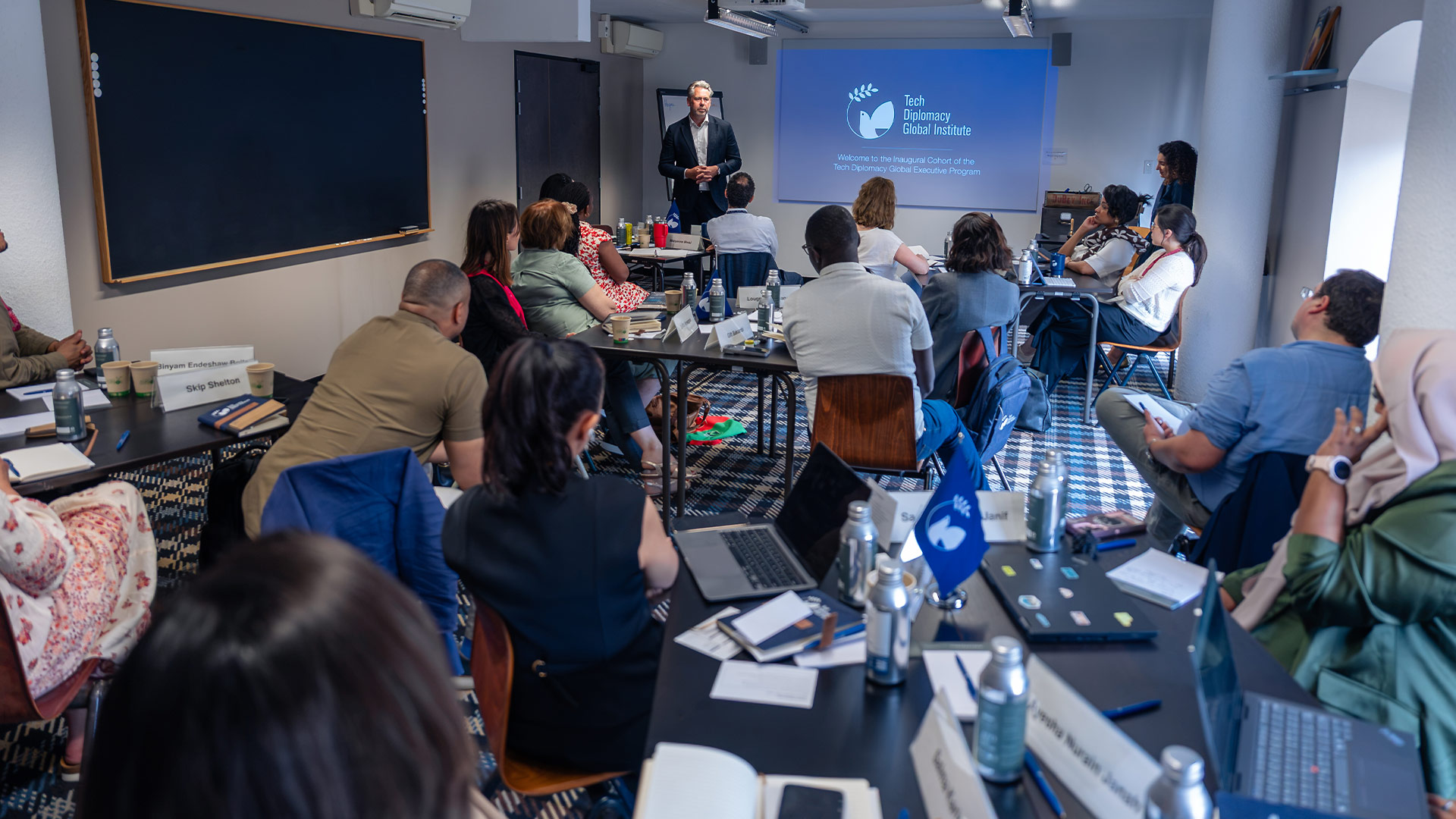
Two immersive weeks in Paris. Four online modules. One Capstone project. An applied experience where participants work on real national priorities alongside senior diplomats and technology leaders.
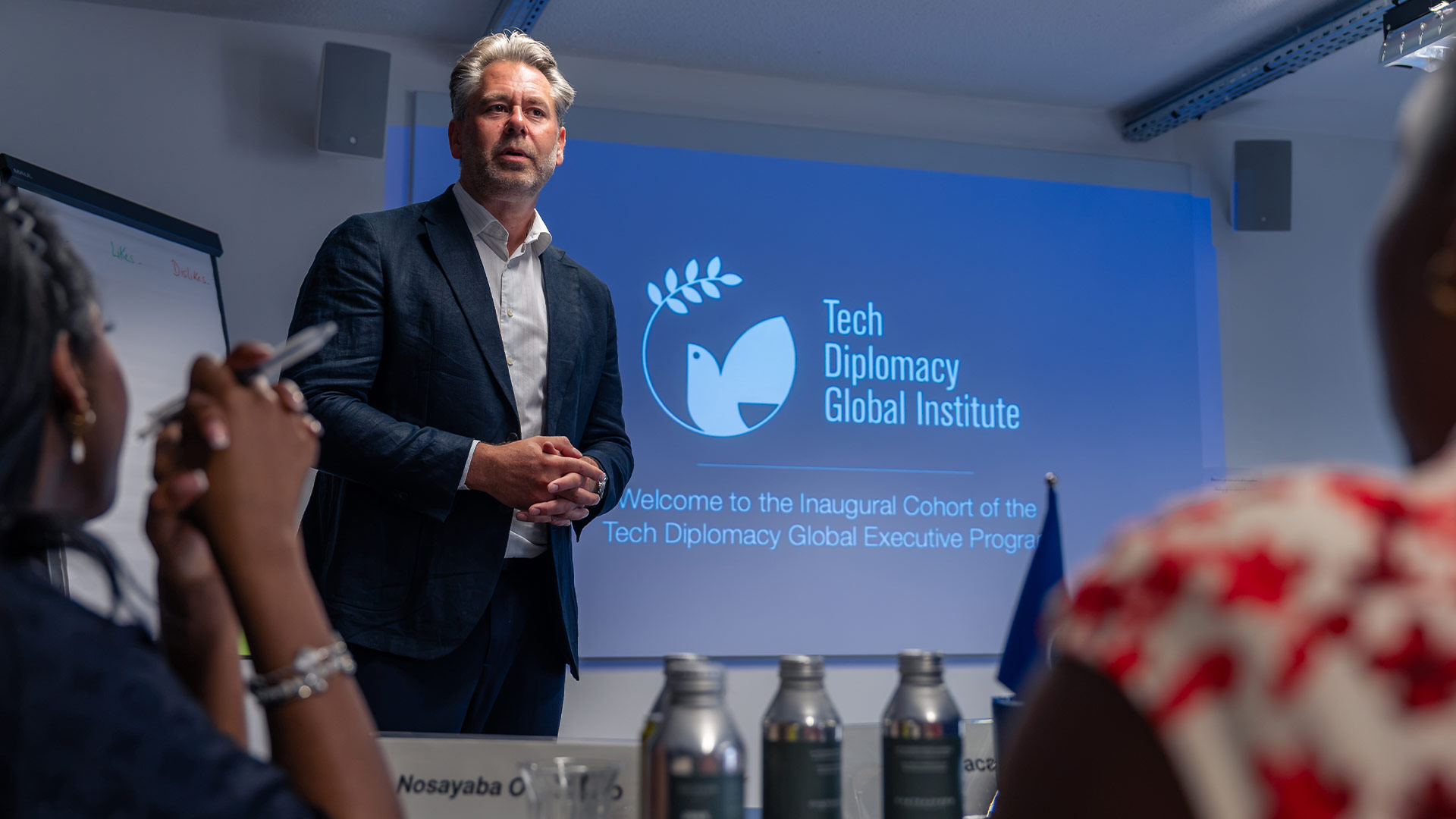
Immersive Week 1 · In-Person · Paris
Launch & Immersive Week 1
Paris, France
Theme: Understanding the Geo-Technology Landscape and Defining National Priorities
- Policy labs and simulations anchored in real national priorities
- Case studies on Tech Diplomacy in different geopolitical contexts
- Site visits to multilateral institutions, technology actors, and innovation ecosystems
- High-level dialogues with diplomats, senior officials, and industry leaders
- Peer exchange across countries
Online Module 1 · Virtual
From Global Shifts to National Strategy
Online Module 2 · Virtual
Engaging with Industry
Online Module 3 · Virtual
Designing Tech Diplomacy Instruments
Online Module 4 · Virtual
Preparing for Multilateral Influence
Immersive Week 2 · In-Person · Paris
Immersive Week 2 & Capstone Presentations
Paris, France
Shaping Global Outcomes: Negotiation, Influence, and Multilateral Tech Diplomacy
- Advanced simulations on multilateral negotiation and norm-setting
- Capstone project presentations and peer critique
- High-level closing ceremony, graduation, and networking
The Capstone Project
Two participants per country work together to develop a real, institution-ready Tech Diplomacy initiative — designed for immediate use and implementation by their government.
National Tech Diplomacy Strategy



Faculty & Guest Speakers
World-Class Practitioners and Thought Leaders
TDGEP is led by those actively shaping global tech policy and negotiations:
faculty who bring operational experience, academic rigor, and real diplomatic credibility.
Prof. Dr. Tawfik Jelassi
Chair, Supervisory Board TDGI
Professor, IMD Lausanne
Assistant Director General UNESCO
Prof. Dr. Rachel Adams
Founding CEO, Global Center on AI Governance · Research Professor & Executive Director, Leverhulme Centre for the Future of Intelligence, Cambridge · Member, Supervisory Board TDGI
Prof. Corneliu Bjola
Professor of Digital Diplomacy at the University of Oxford
Dr. Stefania Pia Grottola
Tech Diplomacy Expert and Researcher
PeaceTech Division, EssentialTech Centre, Switzerland
H.E. Dr. Eugenio Garcia
Tech Ambassador
Director Department of Science, Technology, Innovation and Intellectual Property
Ministry of Foreign Affairs, Brazil
Prof. Ilan Manor
Chair, ICA Public Diplomacy Interest Group
Member, ISA ICOMM Executive Committee
Senior Lecturer, Department of Communication Studies,
Ben Gurion University of the Negev
Founding Member- Oxford Digital Diplomacy Research Group
Dr. Lobna Jeribi
Public Policy Senior Advisor · Former Minister of Higher Education and Scientific Research, Tunisia
Dr. Margaret Nyambura Ndung’u
DPI Safeguards Strategic Advisory Board
United Nations Office for Digital and Emerging Technologies
Casper Klynge
World’s First Tech Ambassador (2017), Denmark
Martin Rauchbauer
Federal Ministry for International and European Affairs, Austria
Raul Echeberría
Executive Director
Latin American Internet Association (ALAI)
Dr Olga Cavalli
Director, South School on Internet Governance
Is TDGEP for You?
Selective. Global. High-Impact.
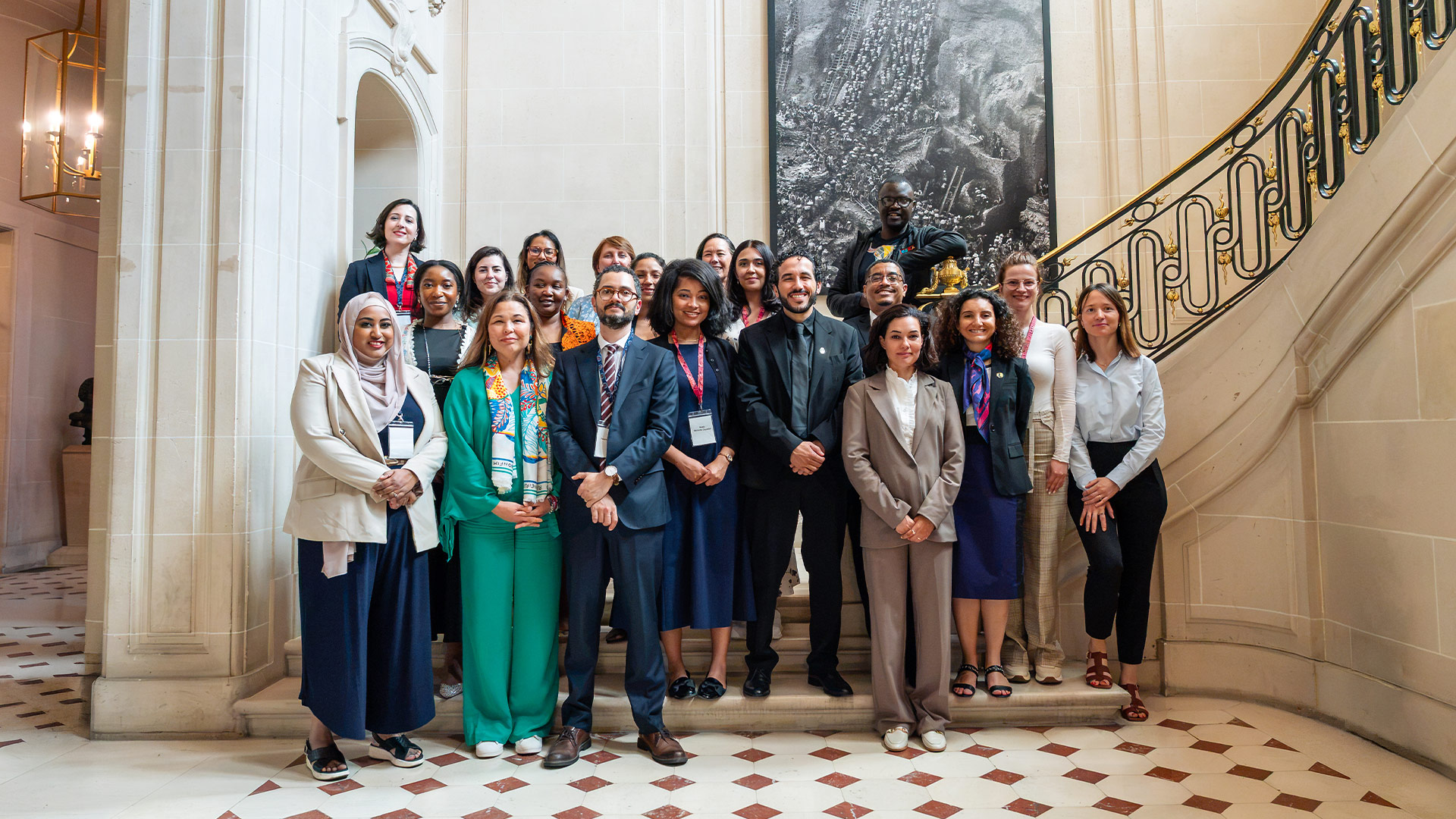
Each TDGEP cohort is limited to 40 senior leaders to ensure depth, trust, and exceptional learning quality. Participants are selected for their seniority, mandate, and institutional impact potential.
Tech Ambassadors, Senior Diplomats & Government Officials
Officials representing national interests in the global technology landscape
Senior Corporate Officials
Leaders at the intersection of technology, public affairs, and digital policy
Regulators & Digital Governance Leaders
Strategic Advisors & Executive Office Leaders
Prerequisites
10+ Years of Relevant Experience
Demonstrated leadership at the intersection of technology, policy, or diplomacy
Employer Endorsement
Full Program Commitment
Government Nomination (Preferred)
Investment
Tuition & Scholarships
Standard Tuition
2026/7 Cohort- Two immersive weeks in Paris
- Site visits & local transportation during immersive weeks
- Four online courses and access to the learning platform
- Capstone project supervision, mentorship, and expert feedback
- Program resources and materials
- Executive certification and digital credentials
Ready to Shape Global Tech Policy?
Join the 2026/7 cohort and become part of an elite network of tech diplomacy leaders.
Cohort 2 starting on the 7-11 December 2026
Application Deadline: 18 October 2026
Cohort Size: Limited to 30
Scholarships available for qualifying candidates from emerging economies and underrepresented regions.
Shape the Future of Tech Diplomacy
Join 40 senior global leaders in the world’s premier tech diplomacy executive program.
Applications reviewed on a rolling basis