
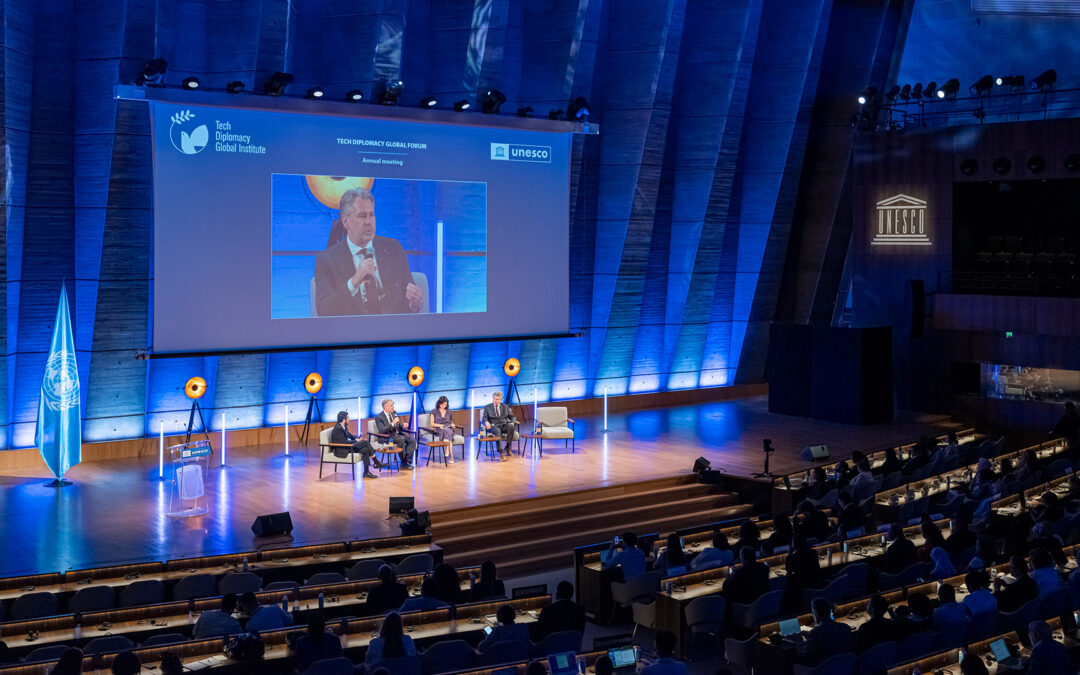
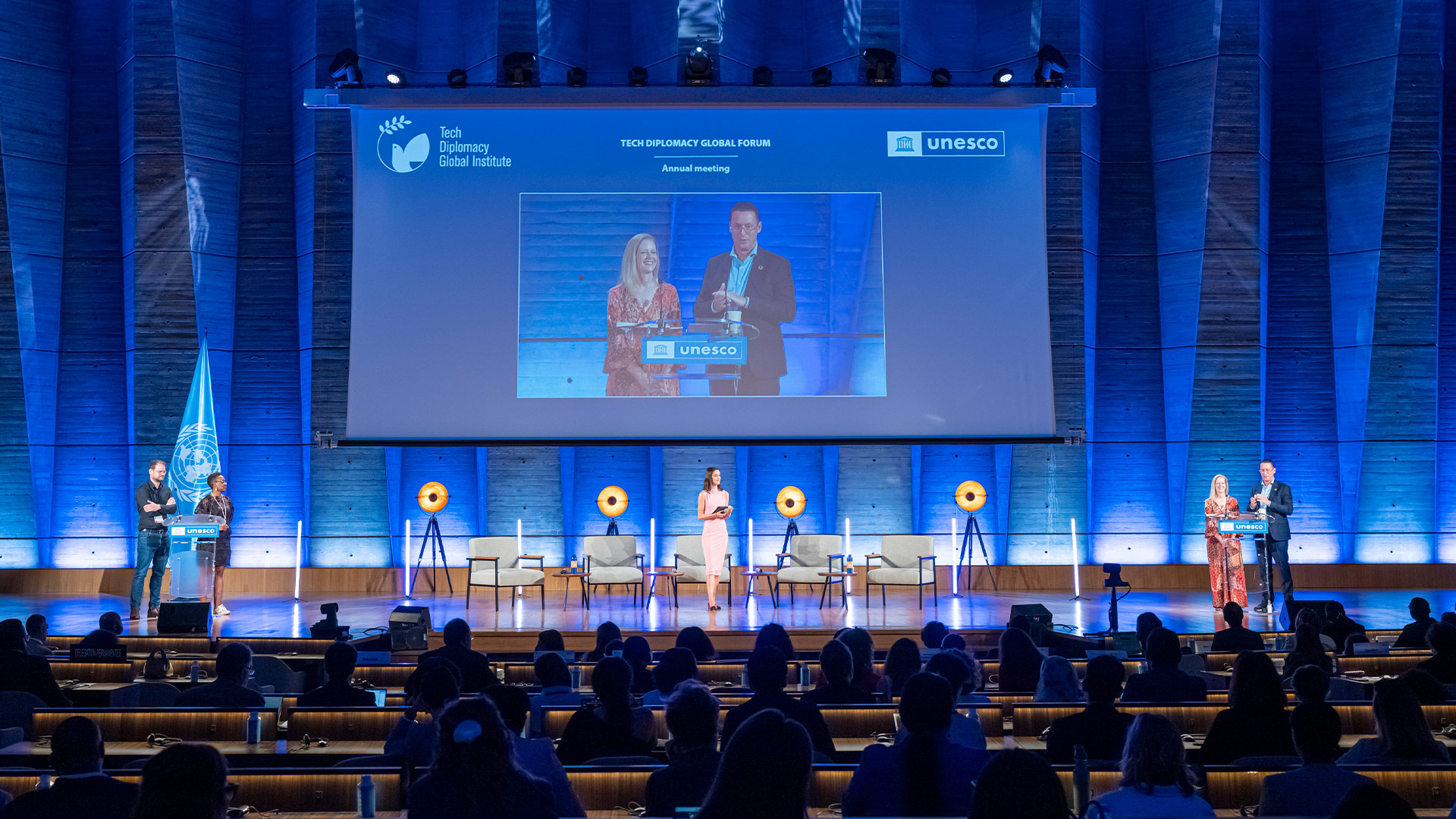
Paris, July 2026 — On Thursday 2 July 2026, the Tech Diplomacy Global Institute convened the second edition of the Tech Diplomacy Global Forum in Room I of La Maison de l’UNESCO in Paris. Under the theme “Tech Diplomacy as Statecraft: Building Trust in a Fragmented Era,” the Forum brought together ministers, ambassadors, senior officials, technologists, scholars and civil society leaders from every region of the world for a full day of deliberation on the defining question of this decade: how nations can build and maintain the trust required to govern technology, quickly enough and broadly enough to matter.
The choice of venue was deliberate. UNESCO was founded on the conviction that lasting peace must be built in the minds of women and men, beyond treaties and charters. Eighty years on, the Forum gathered in that same spirit to ask what this idea now requires of us, in an age when so much of the human mind runs through machines.
A Theme Chosen for Necessity
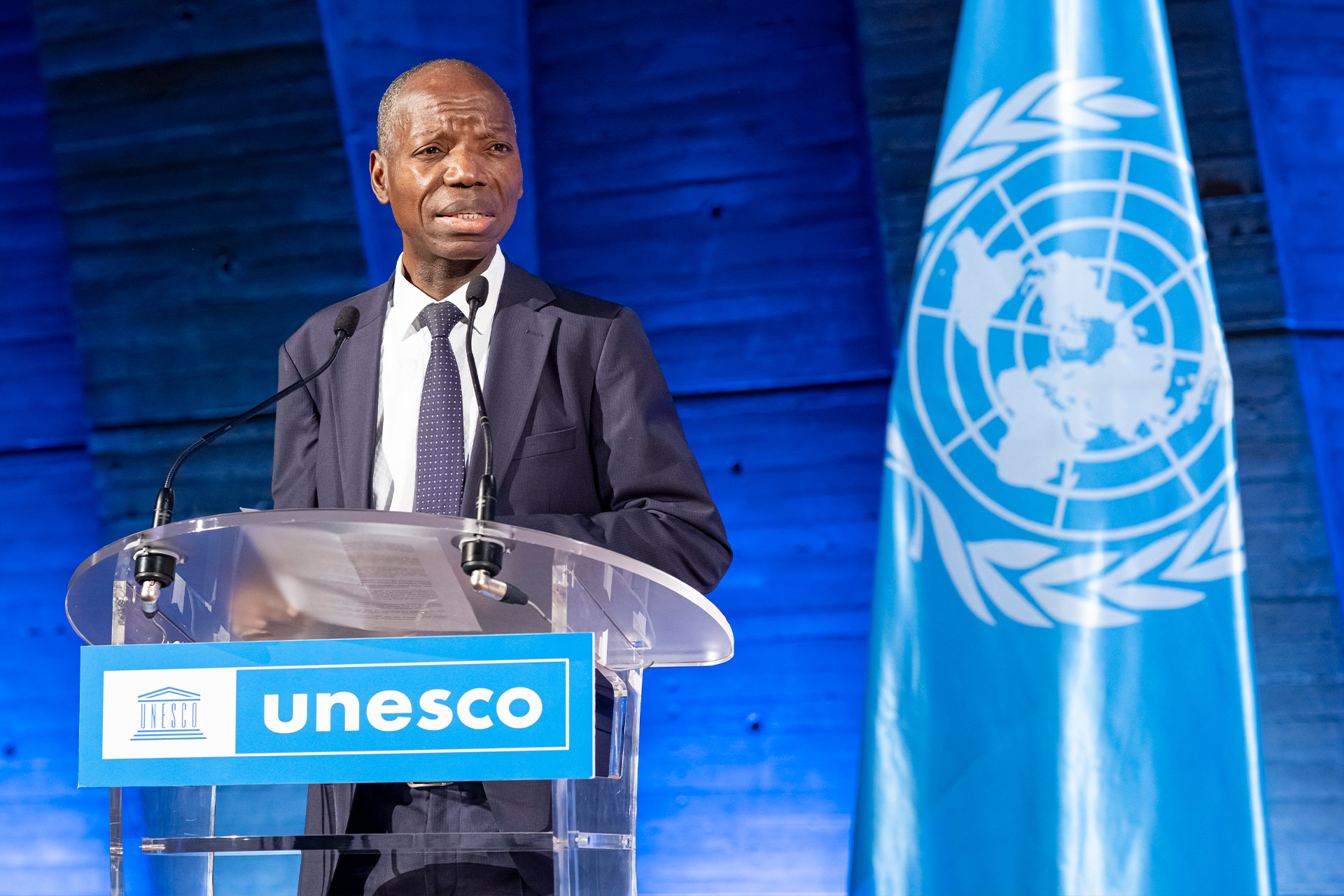
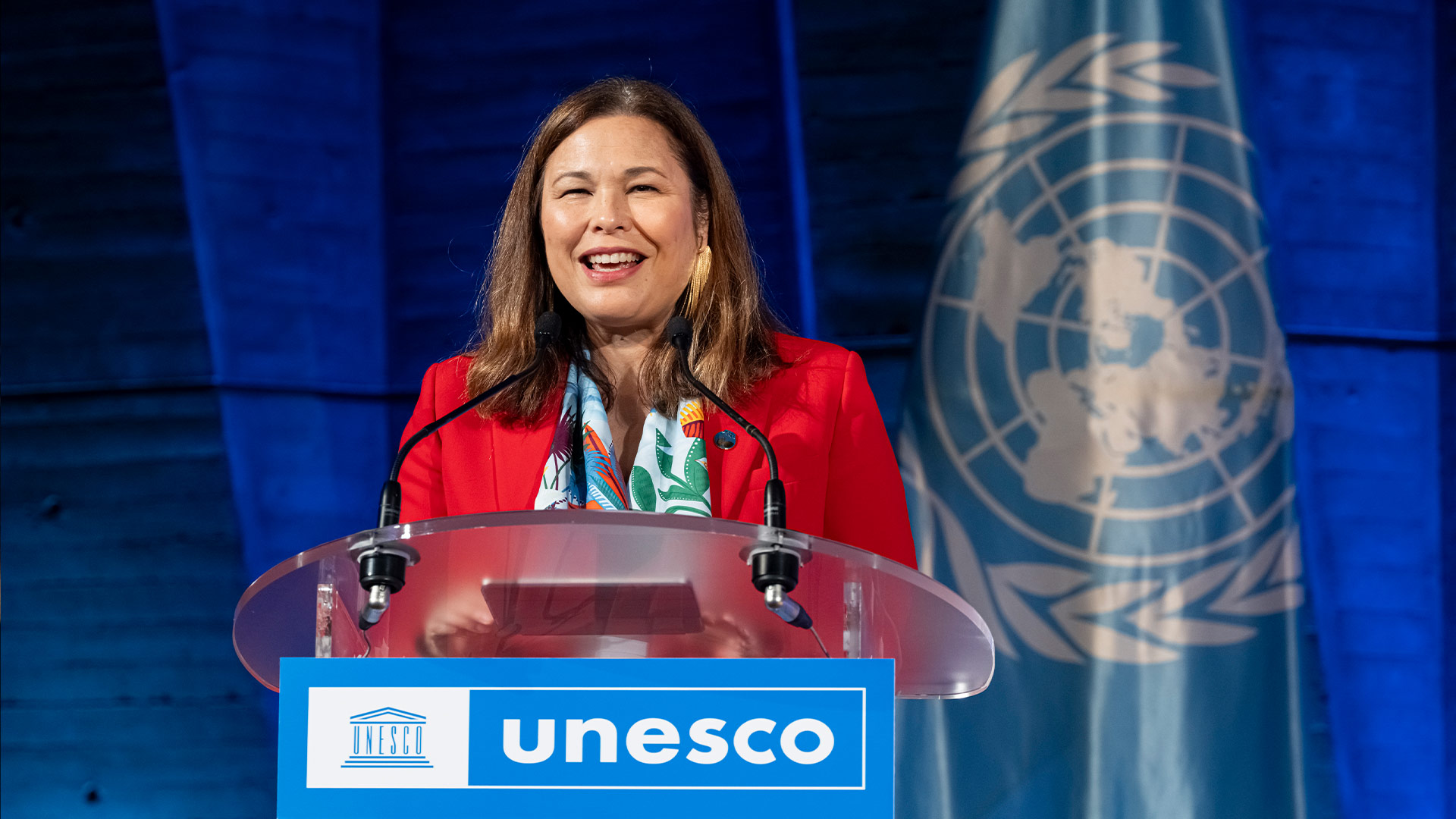
Opening the Forum alongside Dr. Abou Amani, UNESCO Assistant Director-General for Sciences a.i., our Founder-President Ayumi Moore Aoki set out the premise that shaped the day. Technology has left the domain of experts and entered the domain of statecraft. It shapes how nations compete and how they cooperate, how citizens are informed and misled, who holds power and who is subject to it. A decision taken in a laboratory or a boardroom can reshape a border it will never cross.
Yet the world that must govern these forces is pulling apart: rival regulations that do not speak to one another, uneven distribution of computing power, talent and infrastructure, competing visions of artificial intelligence and data, and a widening gap between the speed of technology and the capacity of institutions to answer for it. Against this backdrop, the Forum advanced a simple proposition: cooperation is not sentiment. Cooperation is strategy. And its foundation is trust, which cannot be declared into being but must be built, patiently and in good faith.
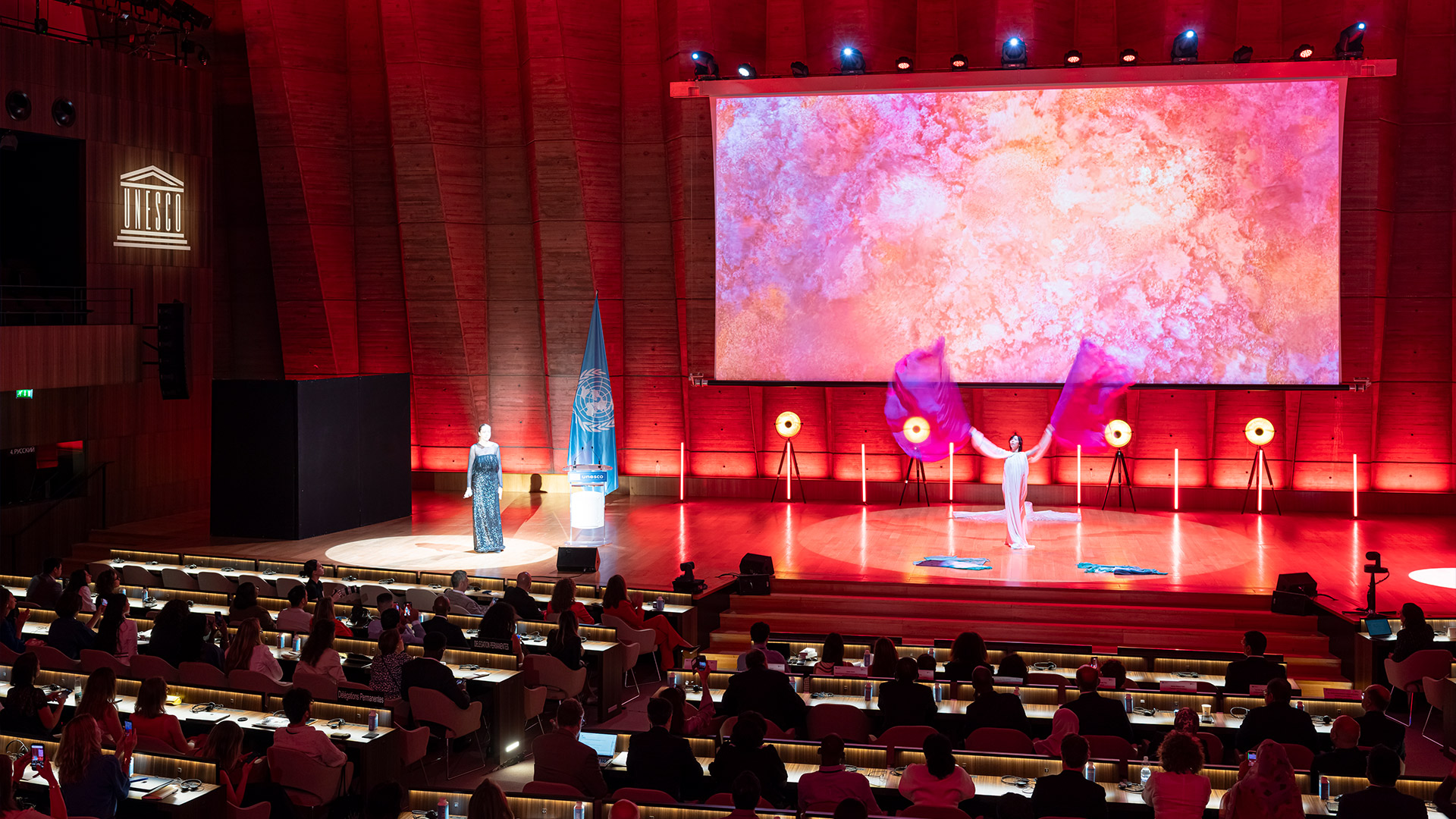
The day opened with Codes Morpho, a performance by artist Céline Shen in collaboration with ArtVerse gallery, performers Tomo Muranaka and Zlata Rosen, and the robot Nao, in partnership with Maxtronics Robotics — a reminder that the encounter between humanity and its machines is cultural as much as it is political.

From Exclusive to Inclusive Policy
The first high-level conversation brought together H.E. Gobind Singh Deo, Minister of Digital of Malaysia, and Dr. Tawfik Jelassi, Chair of the Institute’s Supervisory Board, moderated by Salma Karim of Morocco’s Digital Development Agency. The discussion examined why technology can no longer be treated as a narrow, sectoral issue, and how tech diplomacy can become a genuine engine for development at both the national and international level.
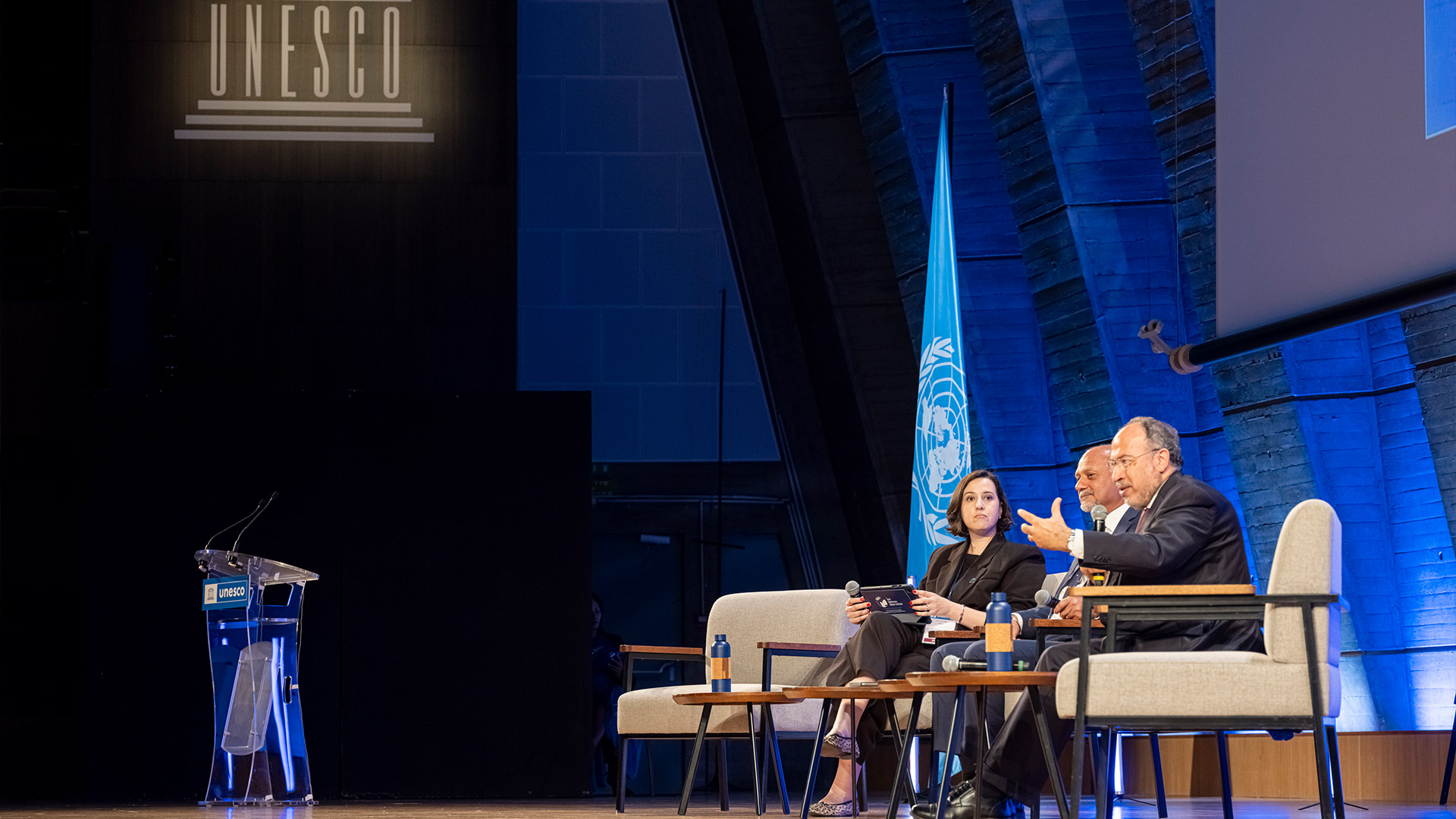
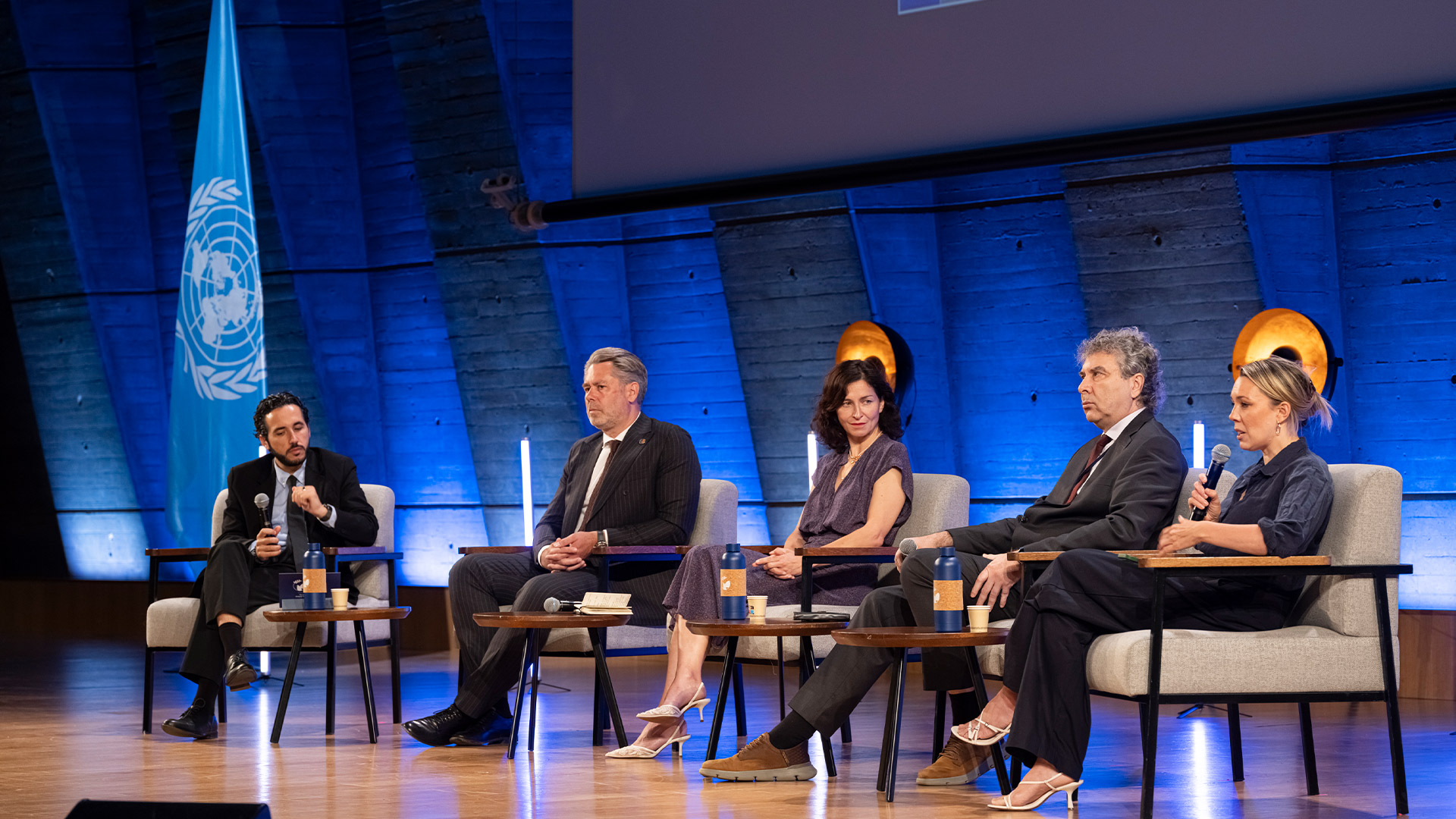
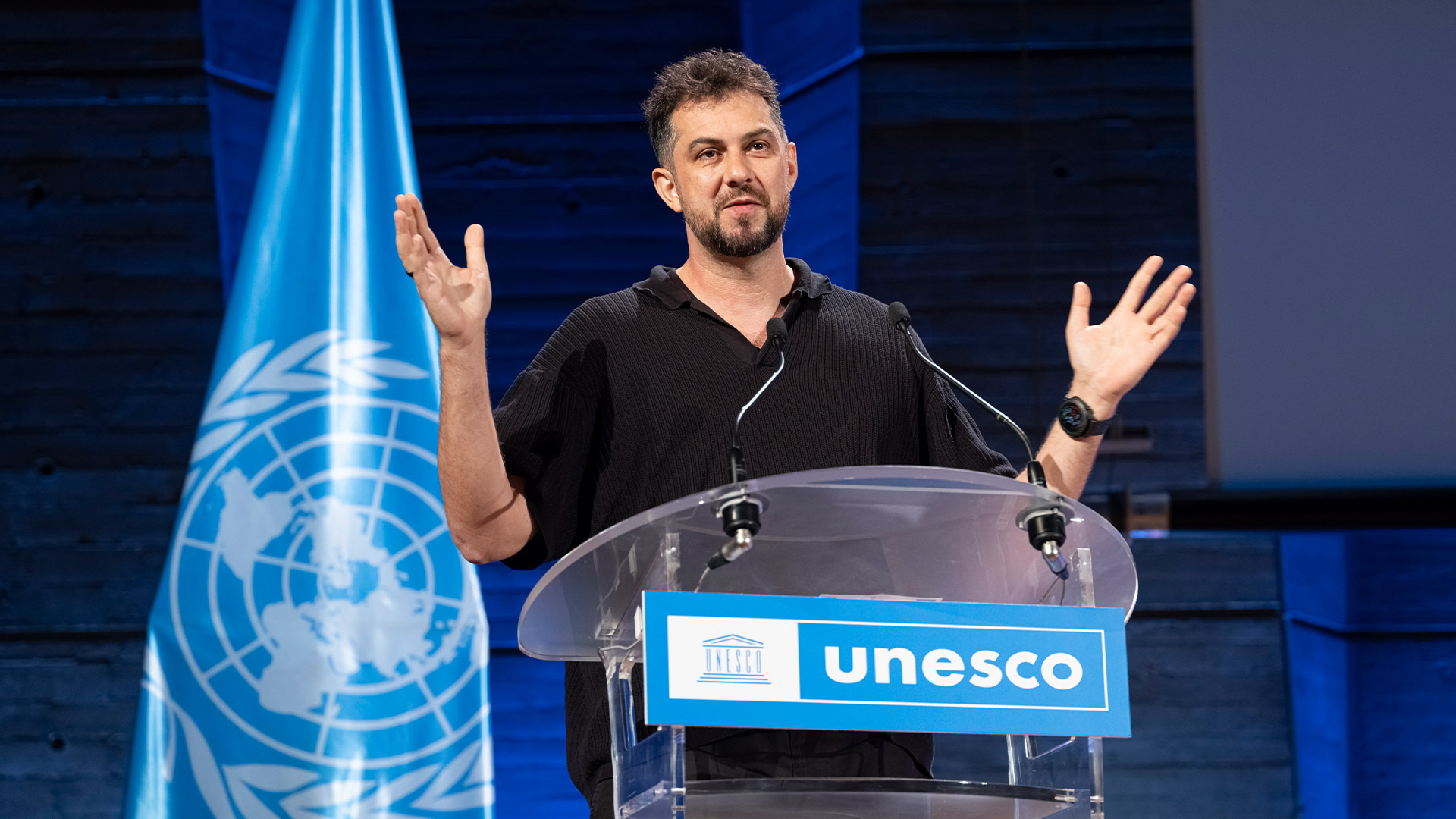
The morning continued with a panel on equity in practice, where Prof. Sonja Schmer-Galunder (University of Florida), Casper Klynge (the world’s first Tech Ambassador, now at Zscaler), Dr. Rachel Adams (Global Center on AI Governance) and Prof. Corneliu Bjola (University of Oxford) examined how governments can steward digital transformation responsibly: protecting rights, fostering innovation, and closing the divides that risk leaving entire regions behind. Dr. Daniel Hulme, CEO of Satalia, then delivered “Signals from the Digital Frontier,” a briefing on what is coming over the horizon.
States and Companies: Who Shapes Global Order?
In one of the day’s most anticipated moments, an Oxford-style debate confronted the motion that technology companies now shape global order as much as states do. Titi Akinsanmi, Antoine Jardin, Dr. Philippe Vogeleer and Kathryn Rose argued the question that sits beneath every conversation about digital governance: as a handful of companies amass infrastructural, informational and economic power once reserved for sovereign states, has the balance of global influence fundamentally shifted, or does state authority still hold the final word?
The midday session also saw the announcement of the Global 5X AI Impact Accelerator, a new initiative that will be presented in detail in the weeks ahead.
The Craft of the Tech Ambassador
The afternoon turned to the practice of the profession the Institute exists to build. “Meet the Tech Ambassador” gathered pioneers and practitioners of one of diplomacy’s newest roles, including H.E. Ana Maria Pesantes, Ambassador of Ecuador to France, H.E. Helen Popp, Estonia’s Ambassador-at-Large for Cyber Diplomacy, Dr. Tobias Feakin, former Tech Ambassador of Australia, and Henri Verdier of Fondation INRIA, for a candid look at what the role means in practice, from the first appointment in 2017 to its evolution across very different national contexts.
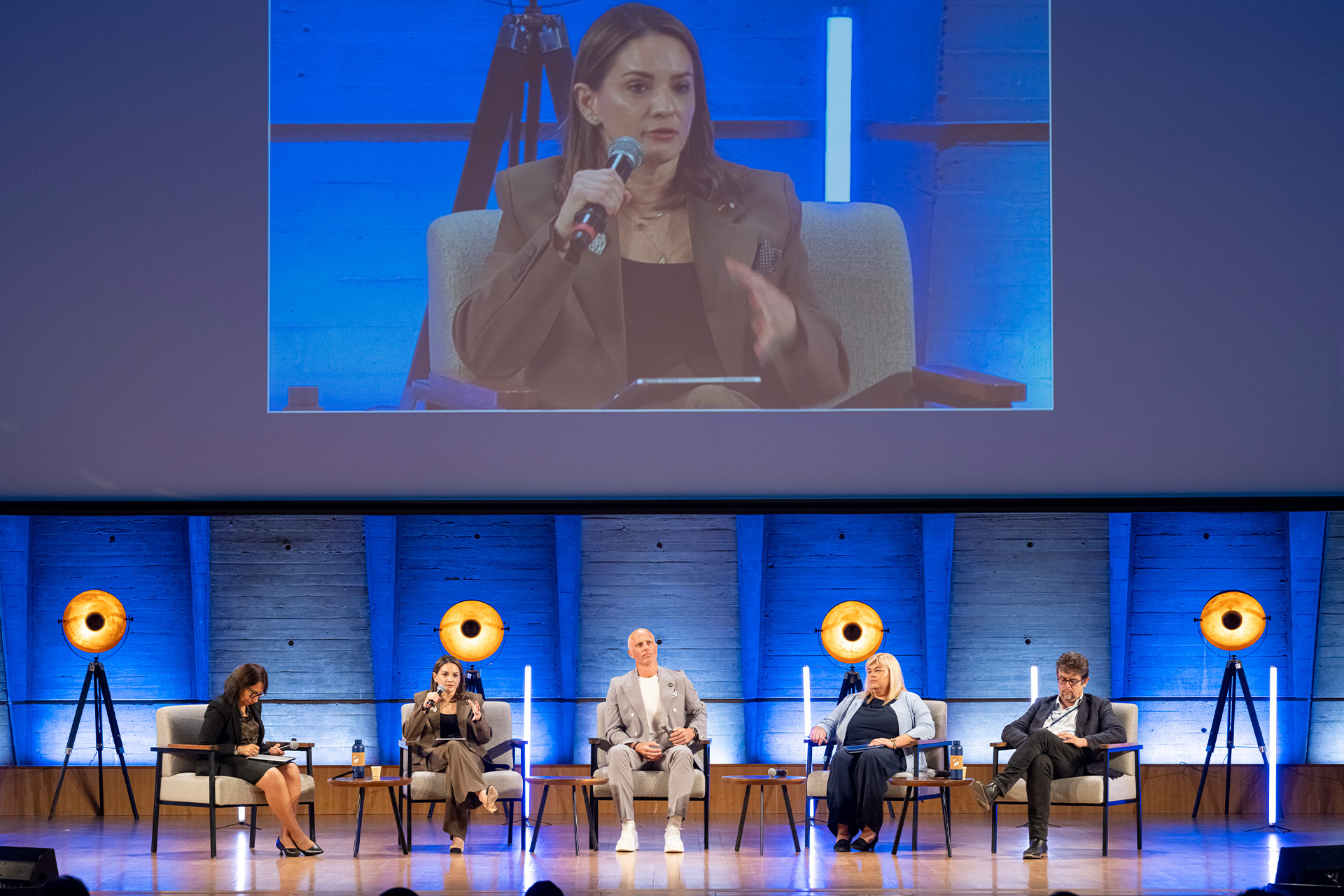
A subsequent session explored AI in foreign policy, both as an instrument within diplomatic practice and as a geopolitical force diplomats must navigate, with Martin Rauchbauer (Austria), Hans-Christian Mangelsdorf (Germany), Dr. Olga Cavalli (South School on Internet Governance) and Prof. Margaret Nyambura Ndung’u (UN Digital Policy Advisory Board).
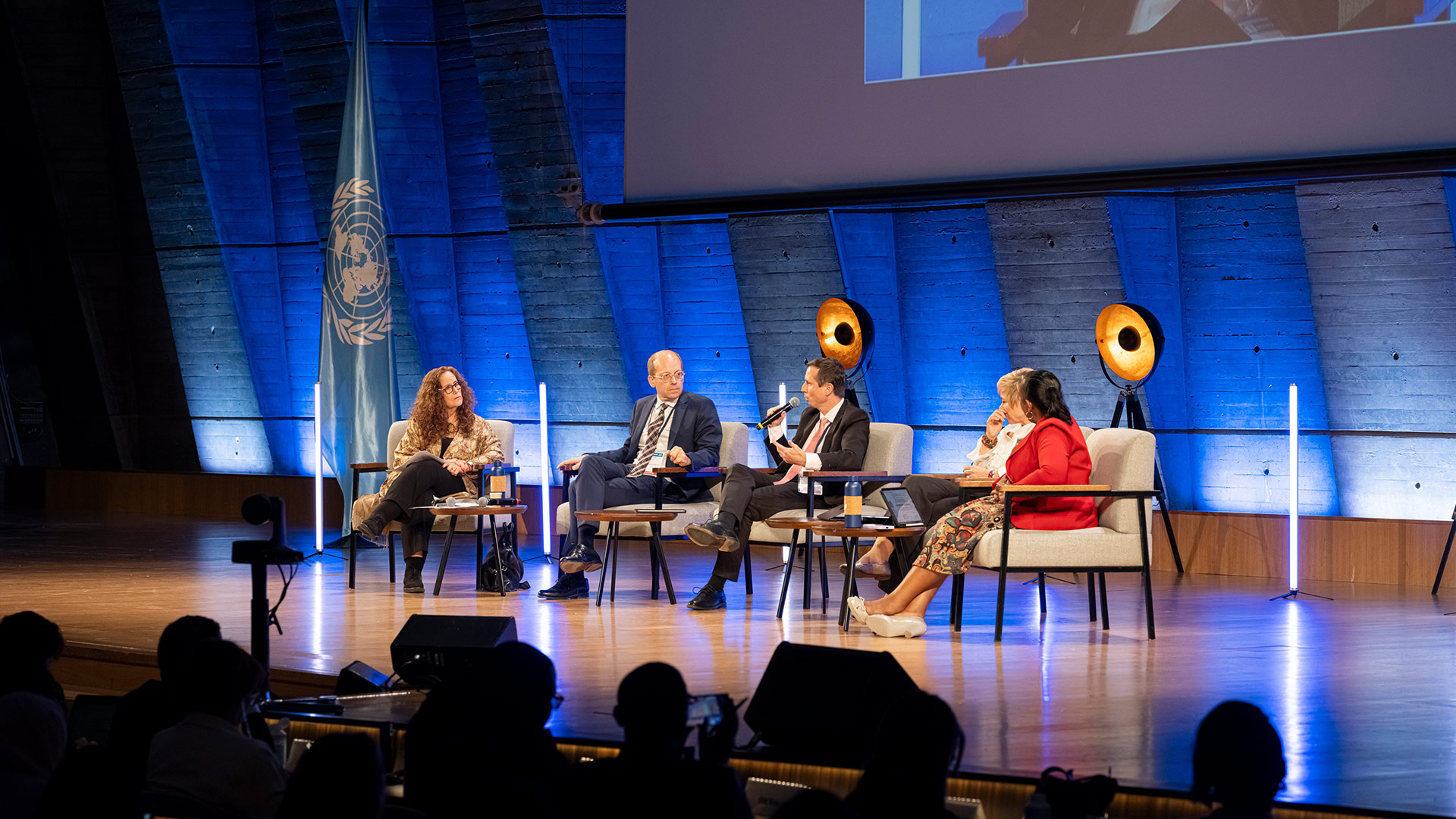
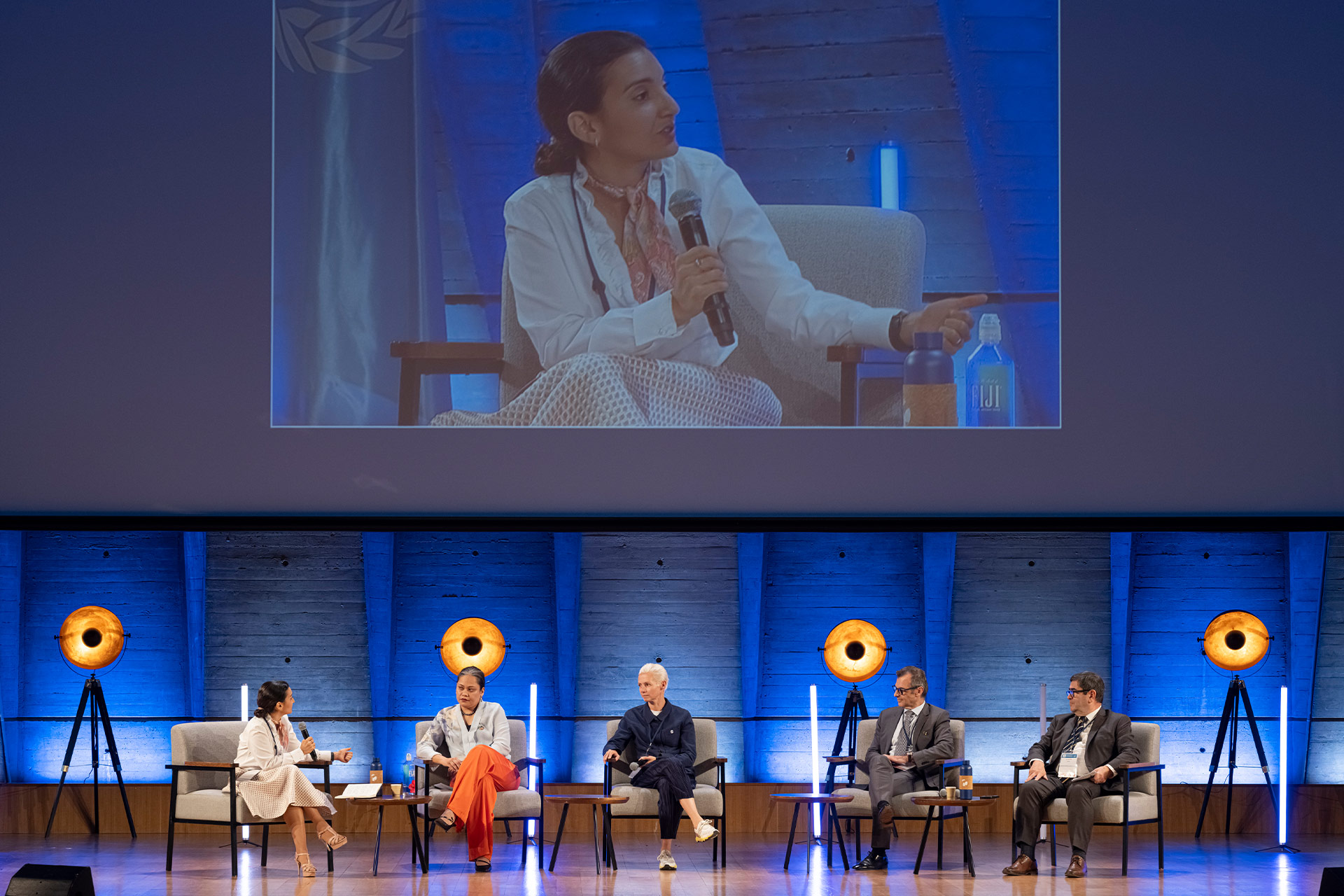
The final panel, “Digital Sovereignty for Open Societies,” addressed a concept at the core of the Institute’s thinking. Sovereignty, in this age, is not about being the largest power in the room. It is the capacity to choose one’s own dependencies: to decide who you rely on for what, and to keep the freedom to change course. By that measure, no nation is too small to be sovereign, and none too large not to need others. Tupoutuah Baravilala (Fiji), Christina Steinbrecher-Pfandt, Manuel Schiappa Pietra and Raul Echeberria examined how governments can strengthen sovereignty while protecting openness, rights, public trust and international cooperation.
From Framing to Action
Closing the Forum with Dr. Shaofeng Hu, Director of UNESCO’s Division of Ethics, Research and Technology, and Ayumi Moore Aoki, Founder-President of TDGI set out the Tech Diplomacy Agenda and the work that must happen next.
One year ago, the Forum was an idea. Today, the Tech Diplomacy Global Institute has a record: the Samarkand Declaration, engagements at Davos, a symposium in Cape Town so that the developing world is heard at the beginning of the conversation and not only at its end, the case for Tech Ambassadors, and the Global Executive Program, which trains a new profession of leaders fluent in both diplomacy and technology.
We are told, again and again, that we must choose: between innovation and ethics, between sovereignty and cooperation, between ambition and responsibility. We do not accept those choices. Guardrails are not found; they are built, by hand, by people willing to sit in the same room and do the patient work.
The second edition of the Tech Diplomacy Global Forum was not a conference to attend. It was work to begin. The future will not be written by technology alone. It will be written by the strength of what we build around it, and by the people willing to build it together.
The Tech Diplomacy Global Institute thanks UNESCO, its partners, speakers and participants. Recordings and materials from the Forum will be made available on this website. To join our work, visit our Get Involved page or subscribe to our newsletter.