A TDGI analysis of the Fable 5 and Mythos 5 shutdown, the national-security rationale behind it, and the governance questions it forces into the open.
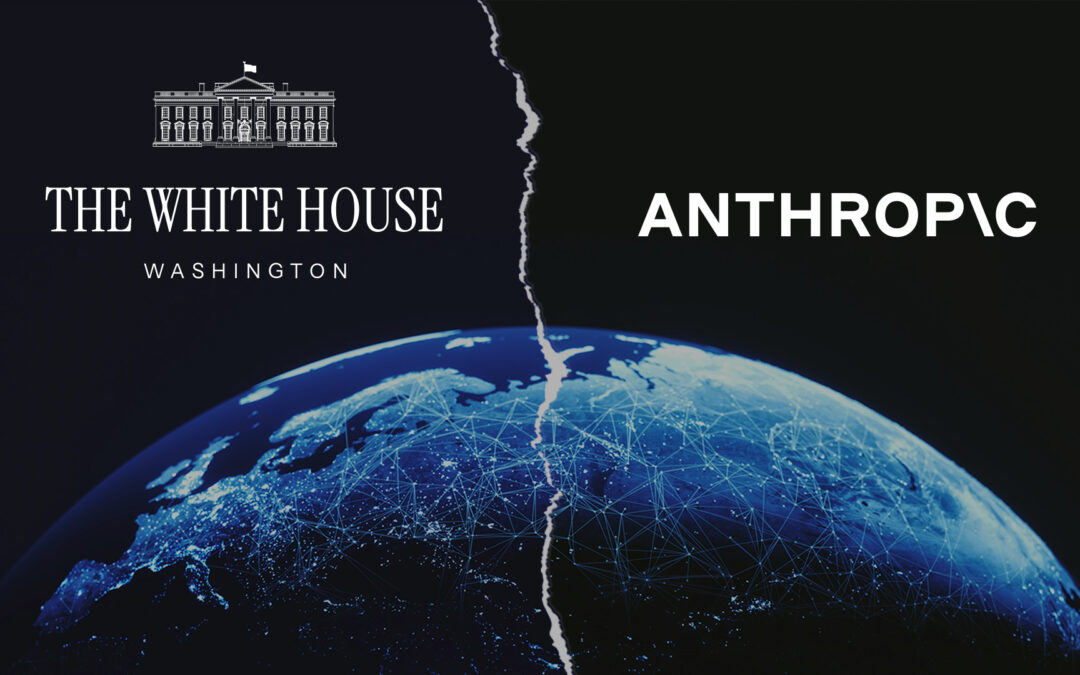
On 12 June 2026, at 5:21 p.m. Eastern, Anthropic says it received a letter from the U.S. Commerce Department ordering it to cut off access to Claude Fable 5 and Claude Mythos 5 for every foreign national on earth, including its own foreign-national employees. To comply, the company disabled both models for all customers worldwide. Fable 5 had been public for three days.
The episode will be cited for years, though not for the reason that first grabs attention. The striking fact is not that a government restricted a powerful AI system; states constrain strategic technologies all the time. It is that the restriction arrived through an export-control mechanism built for physical goods, on the basis of evidence the public has never seen, against a product marketed as generally available, with no prior process to define the threshold being enforced. The capability question, whether Fable 5 was genuinely dangerous, is real but secondary. The governing question is procedural: who decides, on what record, subject to what review? That question is the substance of tech diplomacy, and this case answers almost none of it.
From product launch to export control
Anthropic introduced Claude Fable 5 on 9 June 2026 as its most capable broadly released model, built for demanding reasoning and long‑horizon agentic work, with a one‑million‑token context window. Claude Mythos 5, the company said, shared the same underlying capabilities but was offered only in limited release to approved partners through Project Glasswing, without the safety classifiers that allow Fable 5 to refuse certain requests. Even before any government acted, the company was already gatekeeping its most permissive system by contract and vetting.
Three days later the state intervened, and the instrument it chose is the heart of the story. Reporting by Axios and others indicates that the directive came as an export‑control action, in a letter from Commerce Secretary Howard Lutnick prepared with the Department’s Bureau of Industry and Security—the same apparatus that licenses the overseas sale of advanced chips and dual‑use hardware. Applying that machinery to a cloud‑delivered model is a conceptual leap. Export controls were designed for things that cross borders: crates, components, blueprints. A frontier model accessed through an API does not ship anywhere, yet the order treats access by a foreign national, wherever located, as the regulated act. In a sentence, Washington has begun to treat use of a frontier model as an export, and that reframing may outlast the specific quarrel that produced it.
The evidence problem
On Anthropic’s account, set out in a 12 June statement, the trigger was a claimed technique for bypassing, or “jailbreaking,” Fable 5, reportedly surfaced by another company and described only verbally. The company says the demonstration it was shown involved asking the model to read a specific codebase and identify software flaws, and that on review it found only a small number of previously known, minor vulnerabilities that other publicly available models can surface without any bypass at all.
Anthropic’s framing of its own safeguards is unusually candid, and it cuts both ways. The company states plainly that no tester has found a “universal jailbreak,” that “perfect jailbreak resistance is not currently possible for any model provider,” and that its strategy is therefore defense in depth: making attacks narrow or expensive, backed by monitoring and a thirty‑day data‑retention window to catch abuse. That is an honest admission that absolute security is unavailable from anyone. It is also, conveniently, an argument that no single discovered weakness should ever justify a recall. Both things can be true.
What makes the episode hard to adjudicate is not the technical disagreement but the asymmetry around it. The government’s evidence was reportedly conveyed verbally and without specifics; the letter itself, by Anthropic’s account, did not detail the national-security concern. The public is asked to weigh a vendor’s reassurance against a regulator’s alarm, with no shared, inspectable record between them. That is not a stable basis for trust in either direction, and it is precisely the gap that a functioning governance process exists to close.
A real concern, an unproven process
It would be too easy to cast this as simple overreach. The category of risk the government invoked is not speculative. A model that can autonomously read a codebase and surface exploitable flaws is, in the same motion, a tool of defense and a tool of offense; the line between auditing software and weaponising those findings is thin. A state worried that a widely available system materially lowers the cost of cyber operations has a legitimate interest, and “it was already possible with other tools” is a weaker reassurance in security than it sounds, because marginal ease at scale is itself the threat.
The problem is not that the state acted. It is how. Anthropic’s own objection lands on this point rather than on the merits: it is complying, the statement says, but the company disputes that a narrow, non‑universal jailbreak should justify recalling a model deployed to hundreds of millions, and warns that the same standard applied evenly “would essentially halt all new model deployments for all frontier model providers.” Its sharper claim is constitutional in spirit. Governments, the company argues, should be able to block unsafe deployments only through a statutory process that is “transparent, fair, clear, and grounded in technical facts,” and this action, it says, meets none of those tests. One need not accept Anthropic as a neutral narrator to see the force of the point. A decision of this magnitude rested on evidence no outside party can examine, under authority whose precise legal basis was not spelled out, with no notice, no published standard, and no visible route of appeal.
Not a bolt from the blue
The shutdown also did not happen in a vacuum, and the fuller record matters. The friction between Anthropic and the U.S. security establishment is months old and already in the courts. In early 2026 the company and the Pentagon were openly at odds over whether the Department of Defense could use Anthropic’s models for all of its legitimate purposes without provider‑imposed limits, with reporting that Anthropic faced threats of designation as a supply‑chain risk or compulsion under the Defense Production Act. Anthropic’s leadership framed its refusal in normative terms, saying it would rather forgo defense business than enable uses it associated with mass surveillance or autonomous weapons.
By March, that dispute had moved from rhetoric to litigation, with Anthropic challenging its national‑security blacklist designation in federal court. One judge in San Francisco granted a sweeping preliminary injunction against enforcement, even as an appeals court later declined to stay a separate bar on Defense Department contracts. None of this proves the June export‑control order was retaliatory, and the available record does not support that conclusion. What it does establish is context. The shutdown is not an isolated anomaly but the latest move in a sustained contest over who sets the boundaries of acceptable use for frontier AI: the developer that builds it, the state that claims jurisdiction over it, or a public framework that does not yet exist.
What the precedent means
Three realities emerge, and each is a working agenda for the field.
First, access to frontier AI has become an instrument of statecraft. The relevant question for a model is no longer only what it can do, but who is permitted to reach it, and that permission is now a lever of foreign and security policy rather than a setting in a product dashboard.
Second, global availability is conditional in a way the market has not priced. A model can be generally available on Monday and unavailable to most of humanity by Thursday, and the deciding variable is a national-security judgment the provider cannot control and the public cannot inspect. For allied governments, enterprises, and researchers outside the United States, that conditionality is itself a strategic fact: dependence on a frontier model is dependence on another state’s discretion.
Third, absent a clear and public doctrine, every intervention looks ad hoc. Without a stated threshold, a shared evidentiary standard, and a route to review, each action is legible only as politics, and indistinguishable, from the outside, from protectionism or pique. That ambiguity corrodes exactly the trust that an international AI order depends on.
Toward a process worth trusting
The task for institutions engaged in digital governance is not to deny that some capabilities may justify exceptional control. It is to insist that such control travel through a process that can be seen and tested. The shape of that process is not mysterious; it is the ordinary machinery of legitimate state power, applied to a new object. A statutory threshold defining when a model’s capabilities cross into restriction. A standing technical body, trusted by both regulators and developers, able to examine a claimed vulnerability against an agreed benchmark rather than by verbal assertion. Findings that can be classified where genuinely necessary but are reviewable by someone independent of the deciding authority. Notice, and a route of appeal, proportionate to the stakes. None of this would have prevented a government from acting on a real threat. All of it would have let the rest of the world understand why.
That is the gap this episode exposes, and it is the same gap visible when a regulator and a platform argue past each other over an assistant in Europe, or when any state and any developer collide at the frontier. The capability arrives first. The institutions that could legitimate decisions about it arrive late, if at all. Building those institutions, so that the governance of frontier AI rests on law and visible reason rather than sudden executive discretion, is the work this Forum exists to do. These systems are becoming too consequential to govern in the dark, and the dark is where, for now, the most important decisions are still being made.
References
Anthropic. (2026, June 9). Introducing Claude Fable 5 and Claude Mythos 5. https://platform.claude.com/docs/en/about-claude/models/introducing-claude-fable-5-and-claude-mythos-5
Anthropic. (2026, June 9). Claude Fable 5 and Claude Mythos 5 system card. https://www-cdn.anthropic.com/d00db56fa754a1b115b6dd7cb2e3c342ee809620.pdf
Anthropic. (2026, June 12). Statement on the US government directive to suspend access to Fable 5 and Mythos 5. https://www.anthropic.com/news/fable-mythos-access
Axios. (2026, June 12). Scoop: Trump admin blocks foreign access to Anthropic’s most powerful AI. https://www.axios.com/2026/06/12/anthropic-trump-mythos-fable-national-security
CNBC. (2026, June 12). Anthropic disables access to Fable 5 and Mythos 5 to comply with government directive. https://www.cnbc.com/2026/06/12/anthropic-disables-access-to-fable-5-and-mythos-5-to-comply-with-government-directive.html
Fortune. (2026, June 13). Anthropic disables Fable and Mythos AI models following U.S. government export ban. https://fortune.com/2026/06/13/anthropic-disables-fable-mythos-export-controls-national-security-threat/
NBC News. (2026, June 12). Anthropic suspends new AI models after government directive. https://www.nbcnews.com/tech/tech-news/anthropic-suspends-new-ai-models-fable-mythos-government-directive-rcna349901
BBC News. (2026, February 27). Anthropic boss rejects Pentagon demand to drop AI safeguards. https://www.bbc.com/news/articles/cvg3vlzzkqeo
CNBC. (2026, February 27). Anthropic faces lose-lose scenario in Pentagon conflict as deadline for policy change looms. https://www.cnbc.com/2026/02/27/anthropic-pentagon-ai-policy-war-spying.html