
January 21, 2026 | House of Collaboration, Davos
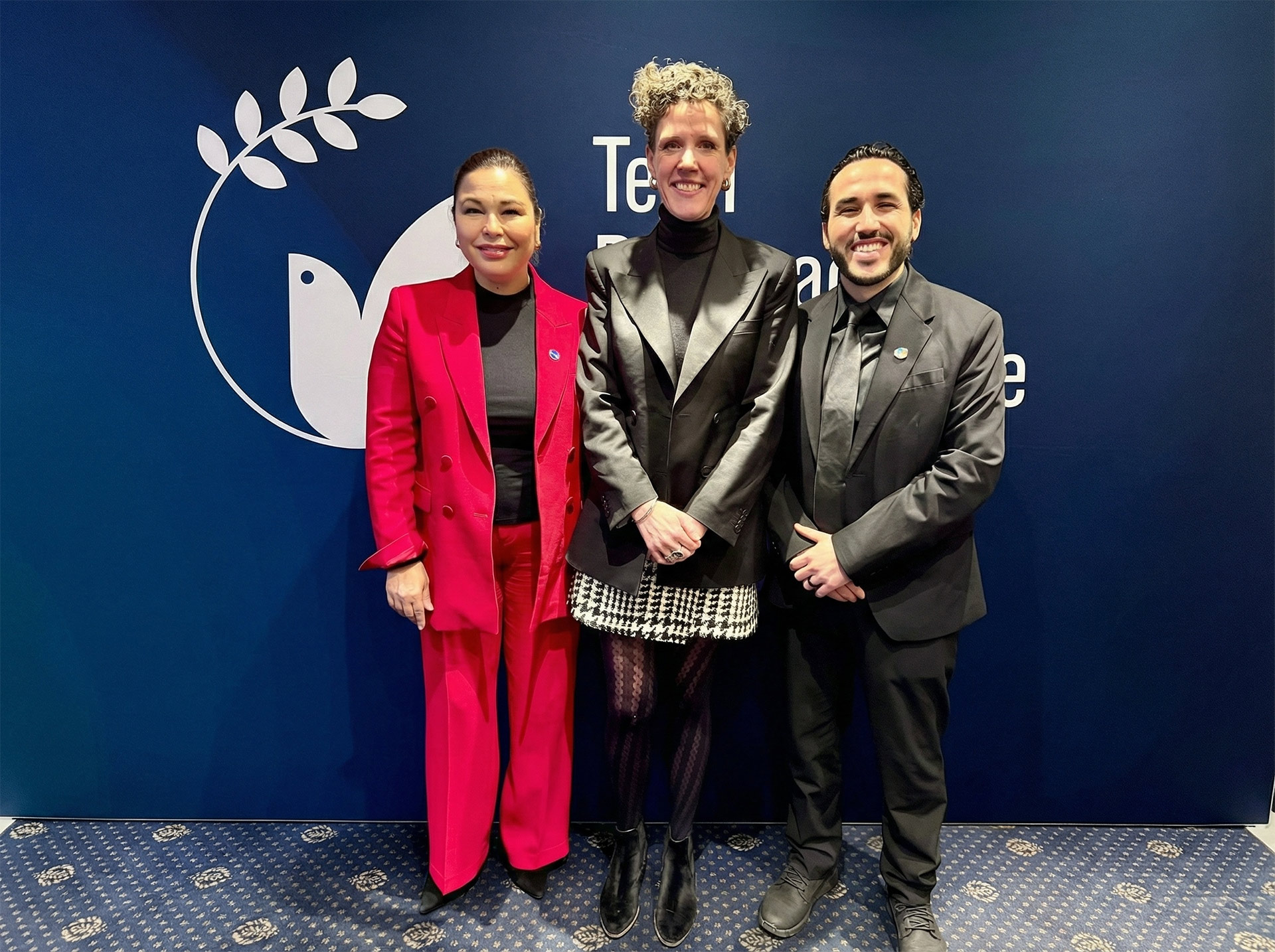
The Tech Diplomacy Global Institute (TDGI) convened global leaders, tech ambassadors, and policy innovators alongside the World Economic Forum in Davos for a pivotal discussion on the future of international cooperation in the digital age. The event, “The Future of Tech Diplomacy Is Collaborative,” marked a significant milestone in TDGI’s mission to transform tech diplomacy from concept to operational reality.
A Critical Moment for Tech Diplomacy
As TDGI Founder and President Ayumi Moore Aoki emphasized in her opening remarks, we are meeting at a moment when technology is no longer merely a supporting tool of diplomacy—it has become one of its central drivers. Artificial intelligence, data, cybersecurity, digital platforms, and emerging technologies now shape power, trust, security, and prosperity worldwide. Yet the way we govern these technologies remains fragmented, reactive, and isolated.
“The future of Tech Diplomacy is collaborative,” Aoki stated. “No nation, no institution, no company can govern the digital world alone. The risks are transnational. The opportunities are shared. And the responsibility must be collective.”
Two Strategic Sessions, One Clear Message
The event comprised two intensive 60-minute sessions, each designed with distinct strategic objectives:
Session 1: The Global Choice Ahead – Fragmentation or Coordination
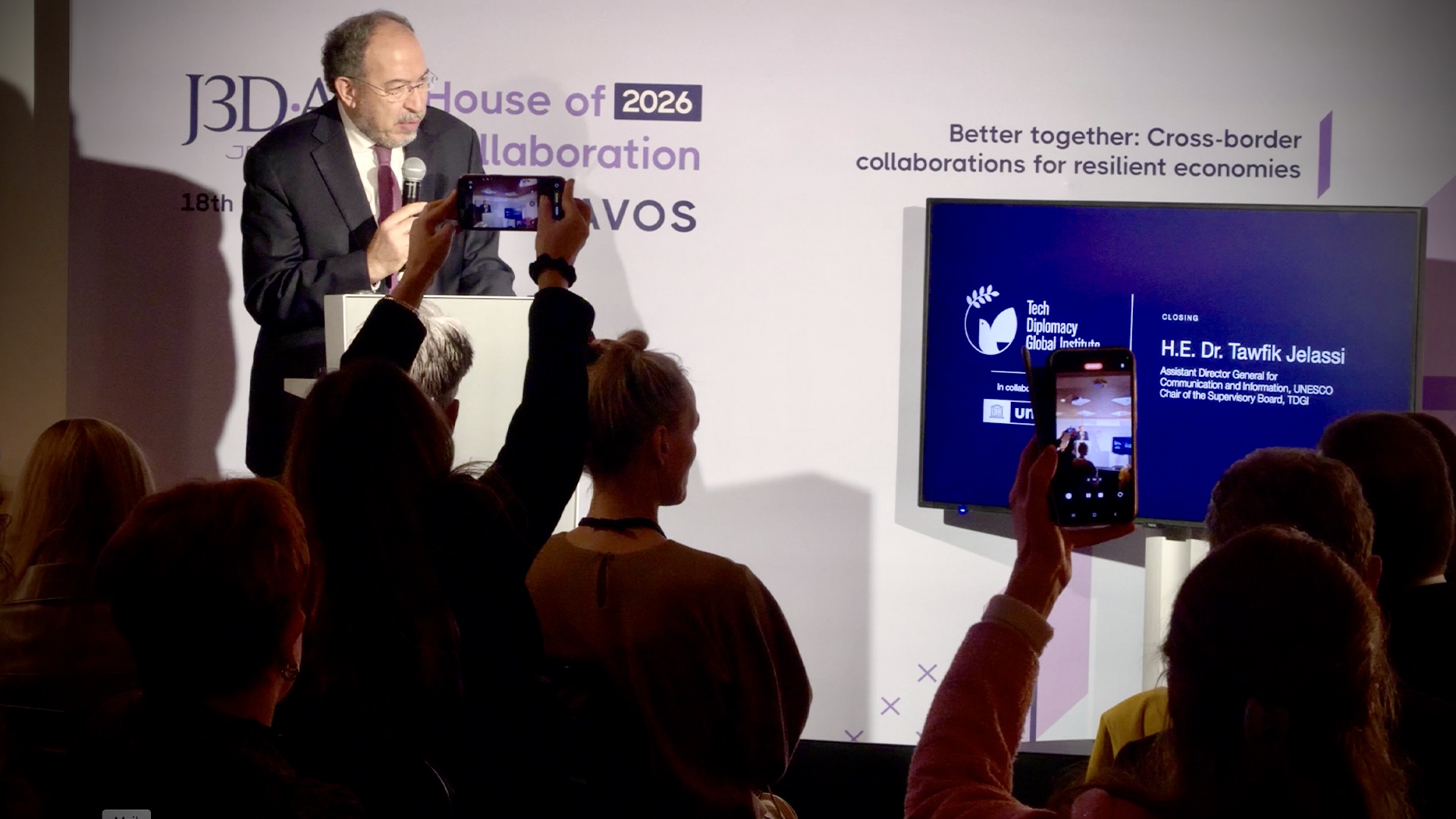
The morning session anchored why tech diplomacy matters now—geopolitically, economically, and institutionally. H.E. Dr. Tawfik Jelassi, Assistant Director-General for Communication and Information at UNESCO and Chair of the TDGI Supervisory Board, delivered the opening keynote, “Who Governs the Digital World?” He addressed how digital infrastructures, platforms, and standards shape geopolitics, and why the absence from tech governance erodes national and regional agency.
The session featured compelling fireside chats with pioneering leaders:
H.E. Anne Marie Engtoft Meldgaard, Tech Ambassador for Denmark, spoke with COO Sïmon Saneback about Denmark’s groundbreaking role as the first nation to appoint a Tech Ambassador in 2017. She shared critical insights on what early years taught her that governments today still underestimate, and where technology has advanced more rapidly than diplomatic coordination.
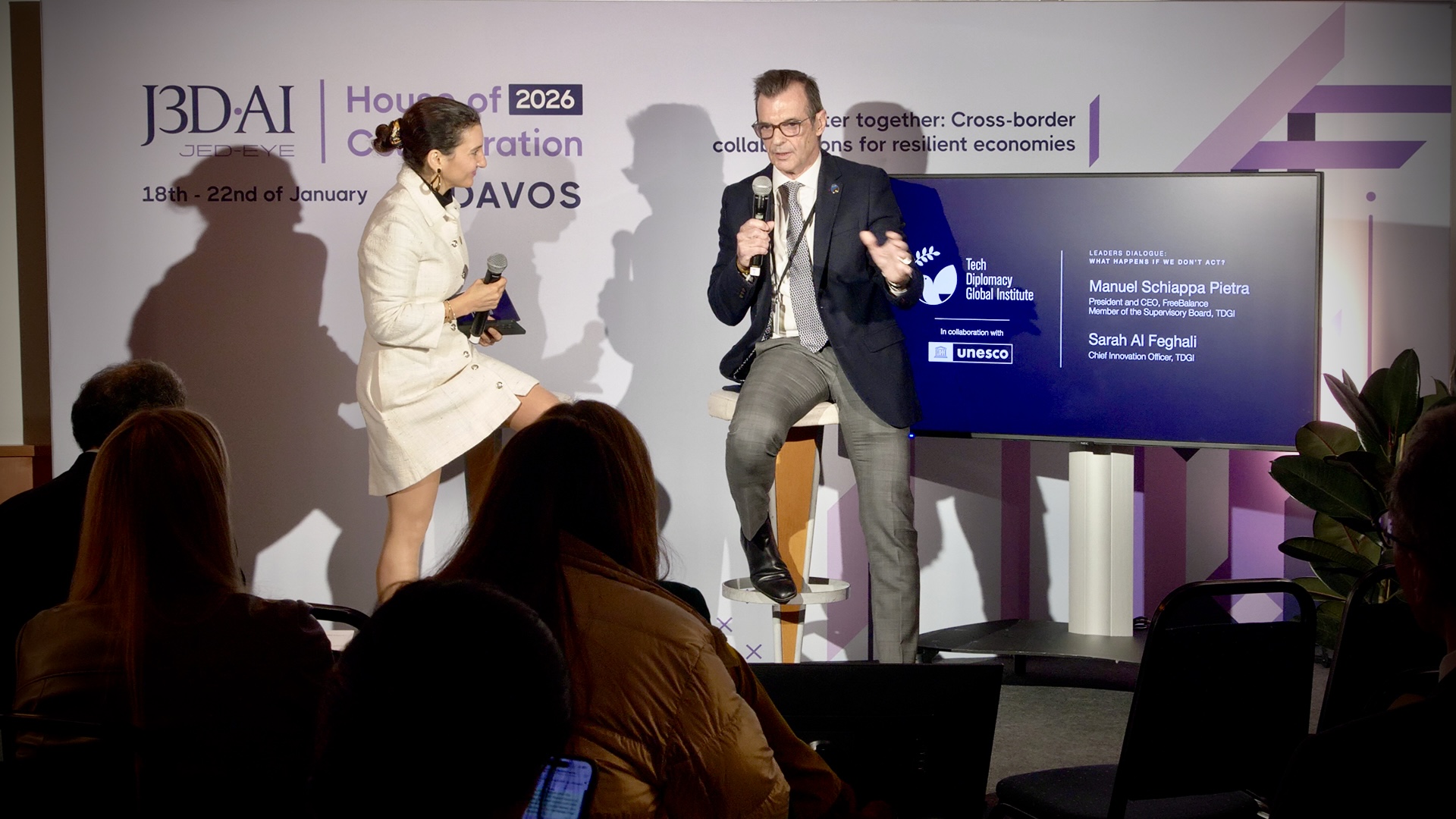
Manuel Schiappa Pietra, President & CEO of FreeBalance and TDGI Supervisory Board Member, discussed with Chief Innovation Officer Sarah Al Feghali the economic costs of fragmented tech governance and the disconnect between policy ambition and implementation capacity.
Session 2: From Vision to Capability – Building the Machinery of Tech Diplomacy
The second session demonstrated TDGI’s evolution as a global convening and capability-building platform. Manuel Schiappa Pietra delivered a keynote on “Building Tech Diplomacy Capability: From Roles to Readiness,” outlining what capability actually means in tech diplomacy and why it must be systemic.
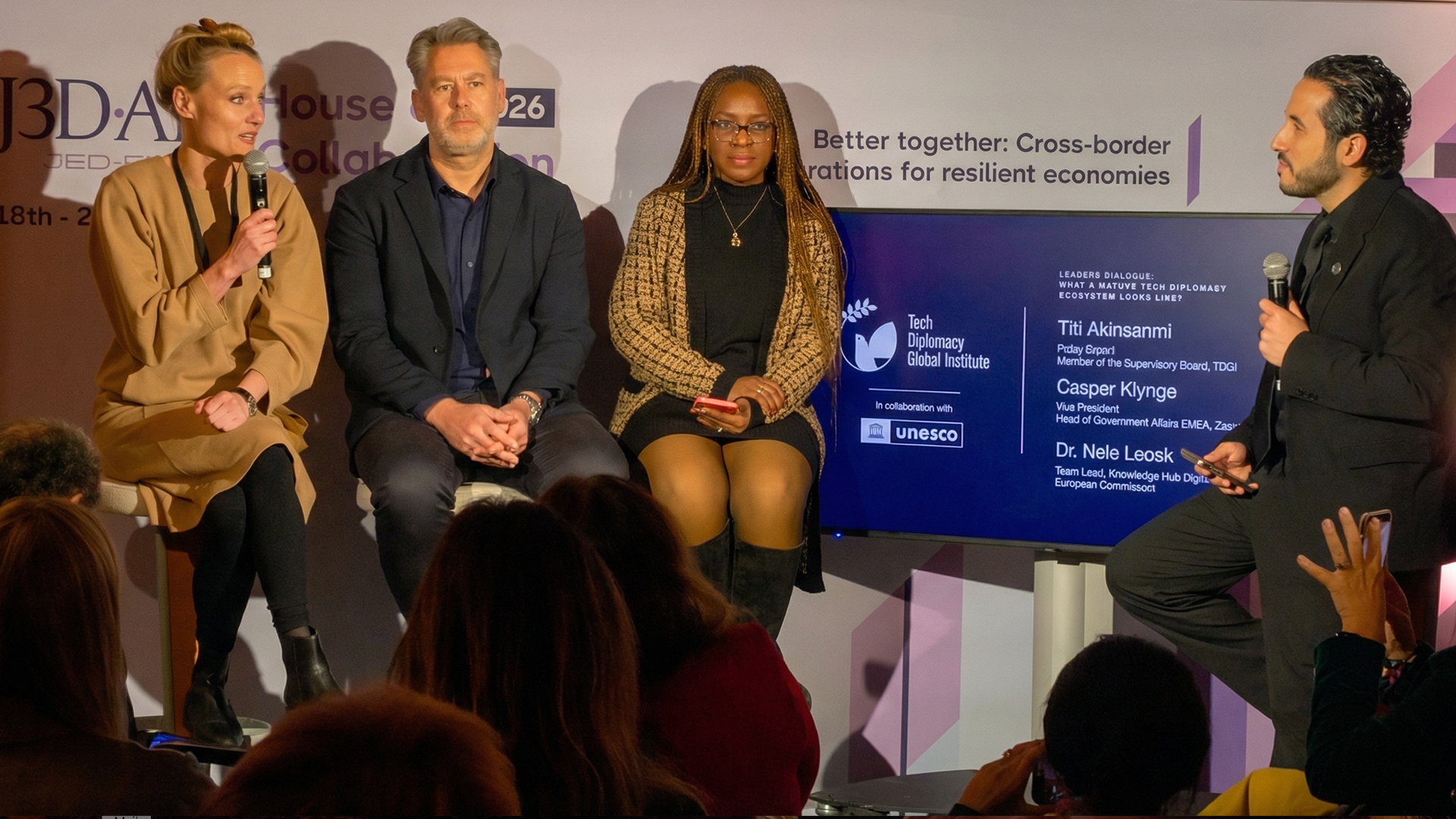
A high-level panel featuring Dr. Nele Leosk (Team Lead, Knowledge Hub Digital, European Commission), Titi Akinsanmi (Policy Expert & TDGI Supervisory Board member), and Casper Klynge (VP, Head of Government Affairs EMEA, Zscaler) explored what a mature tech diplomacy ecosystem looks like, discussing how to coordinate across foreign affairs, regulators, and industry, and identifying missing global coordination layers.
From Paris to Samarkand to Davos: TDGI’s Growing Impact
The Davos gathering builds on significant achievements:
- June 2025: TDGI’s inaugural forum at UNESCO Headquarters in Paris established tech governance as cultural, ethical, and deeply human
- November 2025: The Samarkand Declaration—the first collective call to nation-states to formally appoint Tech Ambassadors, institutionalizing tech diplomacy globally
As Aoki noted, “This was more than a symbolic step. It was the recognition that Tech Diplomacy must be institutionalized and that countries need dedicated leaders who can bridge technology, policy, diplomacy, and society.”
2026: The Year of Operational Reality
TDGI is turning tech diplomacy from vision to action. The institute announced the launch of its first comprehensive report laying foundations for structuring, institutionalizing, and scaling tech diplomacy globally—”not a vision paper, but a blueprint.”
Additionally, TDGI unveiled the Tech Ambassador Global Executive Program, an immersive, practice-focused program with international faculty designed to equip the next generation of Tech Ambassadors with the diplomatic, technological, and strategic capabilities needed to lead.
An exceptionally active year lies ahead:
- February 2026: World Government Summit in Dubai, launching collaboration with UAE Government, UNESCO, UNTB, and the Global Center on AI Governance to accelerate AI adoption and impact
- April 2026: TDGI Symposium in Cape Town, focused on building capacity and collaboration across regions
- May 2026: Silicon Valley Connect in San Francisco, bridging diplomacy with the world’s most influential technology ecosystem
- July 2, 2026: Annual Tech Diplomacy Forum at UNESCO HQ in Paris, advancing the global tech diplomacy agenda
Tech Diplomacy is not about representation alone—it is about orchestration. Not about moving faster individually, but about moving forward together. The Davos gathering was an invitation to think beyond national strategies toward global collaboration, treating tech diplomacy as a shared responsibility.
As Dr. Jelassi concluded, the tension between fragmentation and coordination is not a future risk but a current structural reality. The call to action is clear: engage with TDGI to build capabilities, test models, and shape the future of global tech diplomacy.